

NOTE from JESS: Grateful thanks to Zar Antonov, President of the Obscurium Micronation and Head of the Society of Dracology, for contributing the research notes for this post. They’ve been sitting in my drafts for a while.
This is Part I of a European Dragons series, building on last year’s German Dragons article and a continuation of my Famous Western Dragons post back in 2008.
NOTE from ZAR: I’m quite satisfied with what I compiled and I hope that others will be as well. I’ve included descriptions of the traditions associated with recalling and recounting some of the legends that took place in these towns and cities. These descriptions are mostly from my own visits to the cities—the rest of the information is from the linked sources or books.
Let’s begin with the dragons of Czechia, Poland, and France.
The Dragon of Trutnov and Brno (Czechia)
Dragon Origins of Trutnov
The city of Trutnov in Czechia is a major place for dragons.
There are multiple dragon monuments and many wood carvings on the mountain to the south of the city.
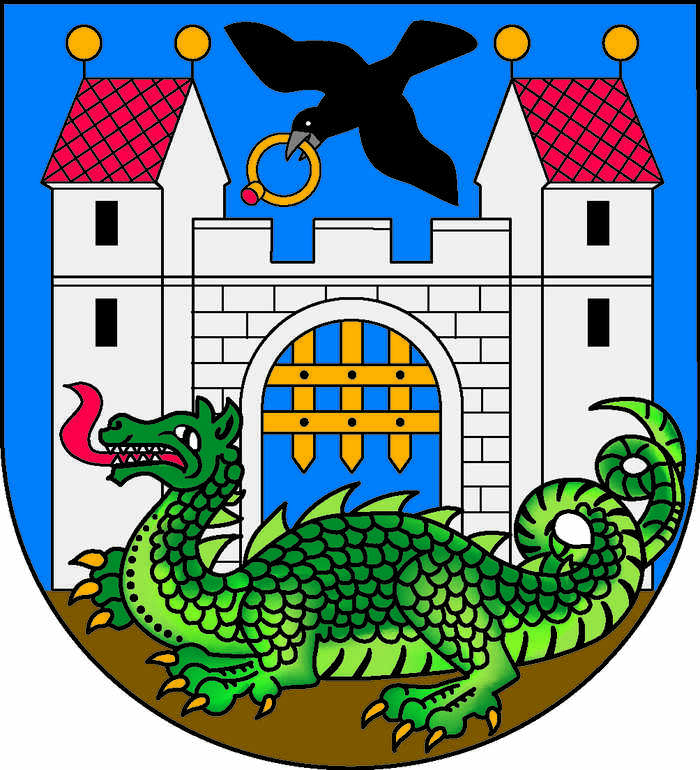

And in the shadowed forests near the Giant Mountains, the founding of Trutnov is steeped in dragon lore.
Knight Albrecht and the Ravine Dragon
Knight Albrecht of Trautenberg, sent by Prince Oldřich to settle the wild lands, was warned by two Masonic companions (Pavel and Mikuláš) of a fire-breathing dragon lurking in a ravine.
Skeptical at first, Albrecht eventually led a daring expedition to trap the beast. Using a lamb as bait and a spiked wooden cage dropped from above, the townspeople immobilized the dragon and suffocated it in a blaze of smoke and fire.
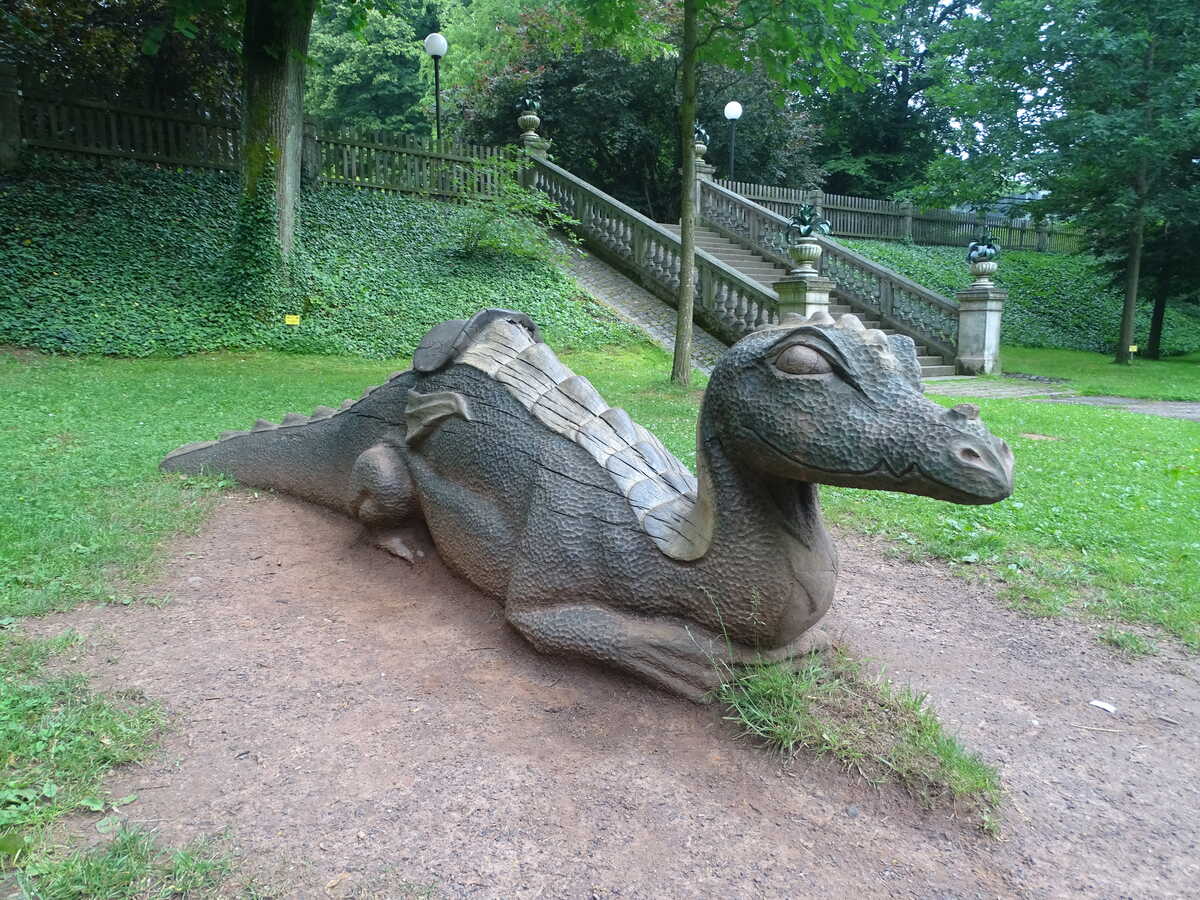
Its skin was dried in the sun before being stuffed with shavings, and hung in a stone tower as a symbol of victory and origin.
The town of Trutnov, which was later built here, was named after the surname of the knight Albrecht. The stuffed dragon was dedicated to the prince Oldřich in memory to the brave deed of the town founders.
The Dragon’s Journey to Brno
But that’s not where the story ends. A continuation of the story says that after the dragon had been given to prince Oldřich, the prince in turn presented the dragon to the city of Brno, where the aldermen hung it in the town hall’s passage.
The prince then granted the city of Trutnov a charter allowing them to use a seal with the image of a dragon. The dragon is said to have been killed in Trutnov in 1006 and to have reached Brno in 1024.
And now comes the interesting part. The dragon is still in Brno!
But when you take a look at it you will quickly notice that it is in fact, a stuffed crocodile.

Relics and Crocodile Skulls
There are multiple other stories about the Brno dragon, including that:
- it actually lived around Brno before it was slain
- it was a gift from the Turks to King Matthias II, and
- crusaders actually brought it back from the Middle East
The last theory is just hearsay apparently, but it becomes interesting when looking at a relic at Karstein castle near Prague.
Here, among the relic collection of Holy Roman Emperor and Bohemian King Charles IV, there is the alleged skull of the dragon St. George killed. And that skull is in fact also the skull of a crocodile.
When discussing this skull, the same theory of it having been brought along by crusaders came up, similar to the hearsay surrounding the Brno Dragon.
Trutnov’s Dragon History
As I already mentioned, Trutnov is home to many dragons.
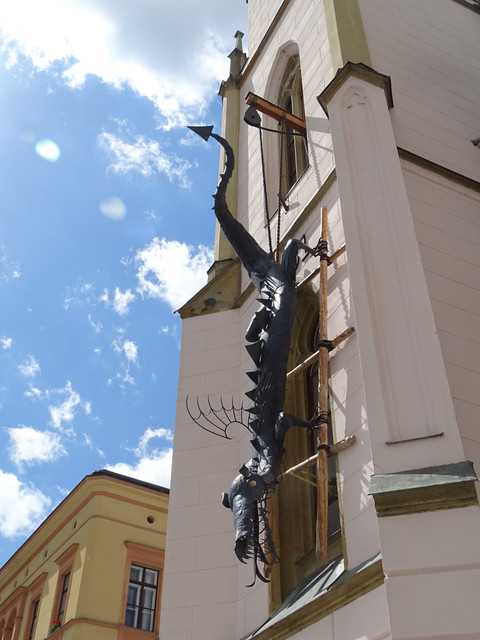
It’s a prime example of an interesting mentality these towns have developed towards their dragons, best expressed in the statement which can be found at the Dragon Alley monument in Trutnov:
“You cruel and shameful monster, you are a blessing to this city, and forever will be.”
Yes, in the story, the dragon is evil and has to be slain. But at the same time, it is a unique and major part of the city’s history, the same as with many other towns.
To celebrate the dragon slaying, a festival is held each year in May.
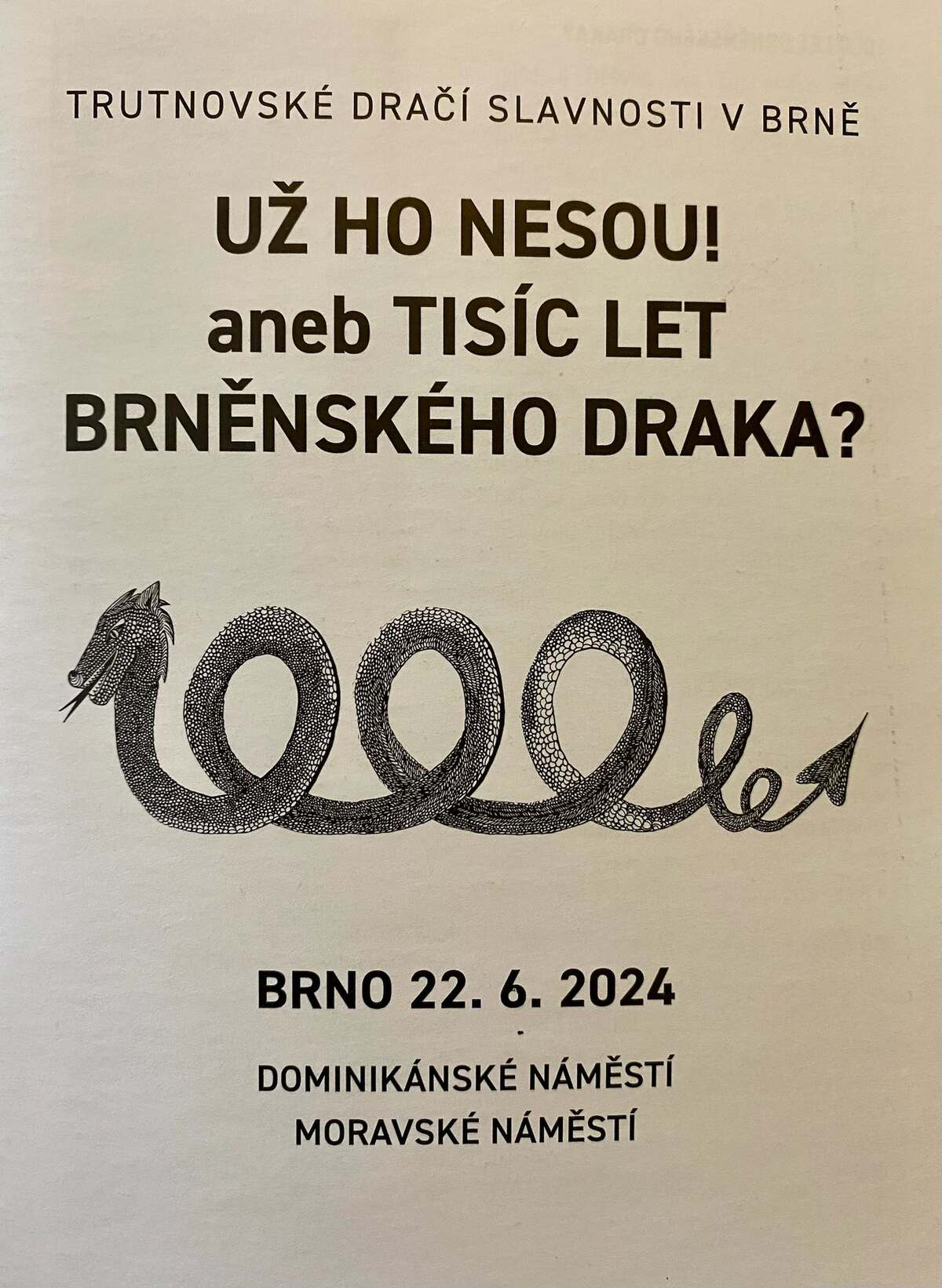
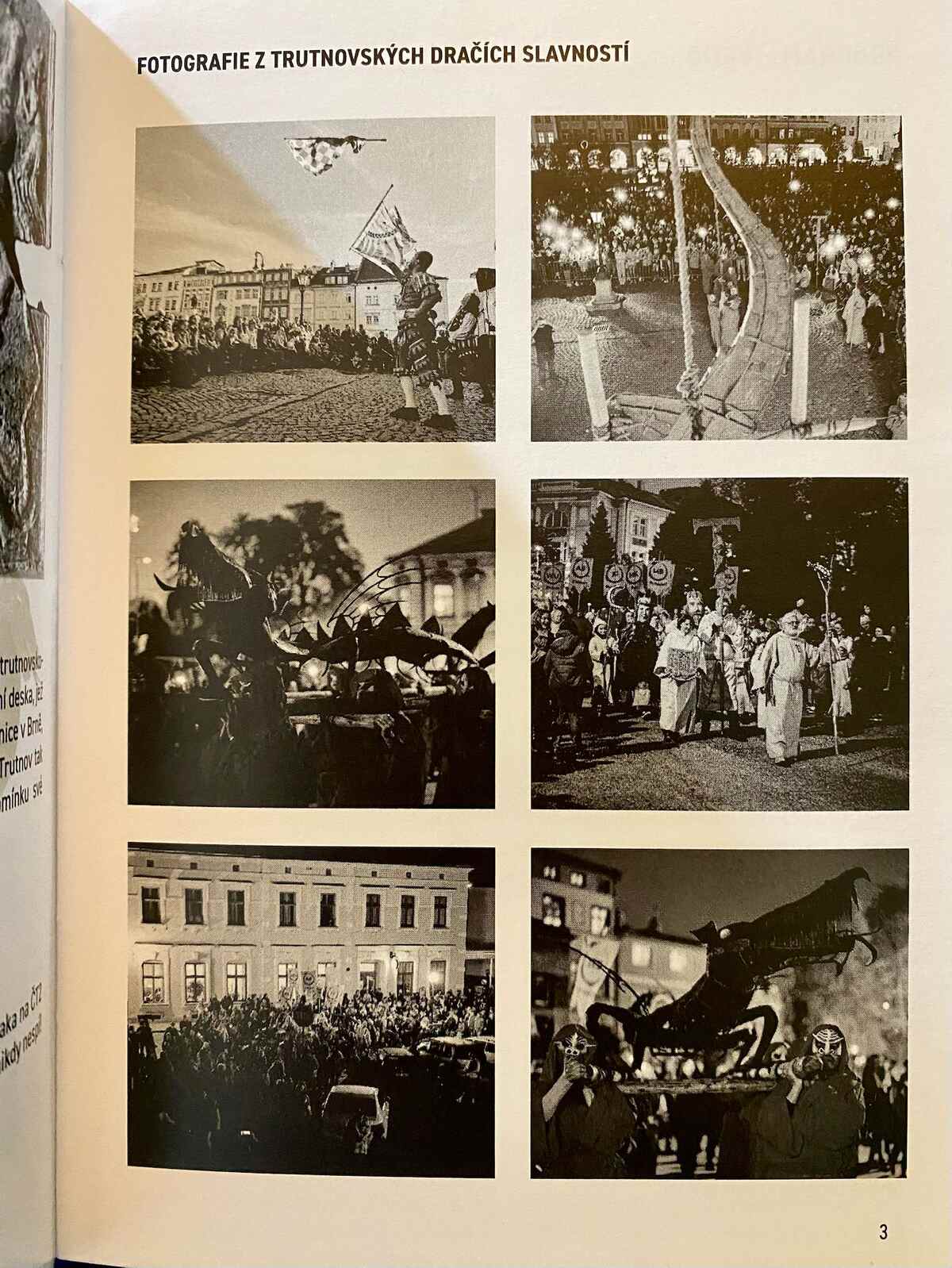
The dragon statue—which hangs from the tower of the city hall in summer—is carried around and then hoisted up the tower, recalling the dragon being hung in the city after the original slaying.
References:
- The Dragon of Trutnov (Atlas Obscura)
- Trutnov dragon defeat legend (ictrutnov.cz; longer story with more details)
- Brno Dragon (encyklopedie.brna.cz)
- Brno Dragon (Atlas Obscura)
- Broumov rocks! (Circuit Rider CZ)
Smok Wawelski (Poland)
When the town of Krakow was founded by its first King, Krak, the King’s fortress was constructed upon Wawel hill, a place full of hidden caves and crevices.
Inside one of these caves lived a dragon, later known as Smok Wawelski or the Wawel Dragon.

He either lived there before the town was founded or arrived shortly after, but at some point he made his presence known by starting to devour the local sheep. Once he ran out of sheep, he set his sights on the local people, having a special taste for virgin girls.
The people of Krakow lived in fear of this beast and King Krak therfore sent many of his best knights to defeat the dragon.
But all of them failed until a shoemaker’s apprentice named Skuba told the King that he had a solution for his problem. In return, he wished to marry the Princess and King Krak agreed, not wanting to abandon his new settlement.
Skuba filled multiple sheep skins with sulphur and left them outside the dragon cave. The dragon left his cave eventually and happily devoured the sheep skins. Immediately, he felt a bad pain and burning in the throat.
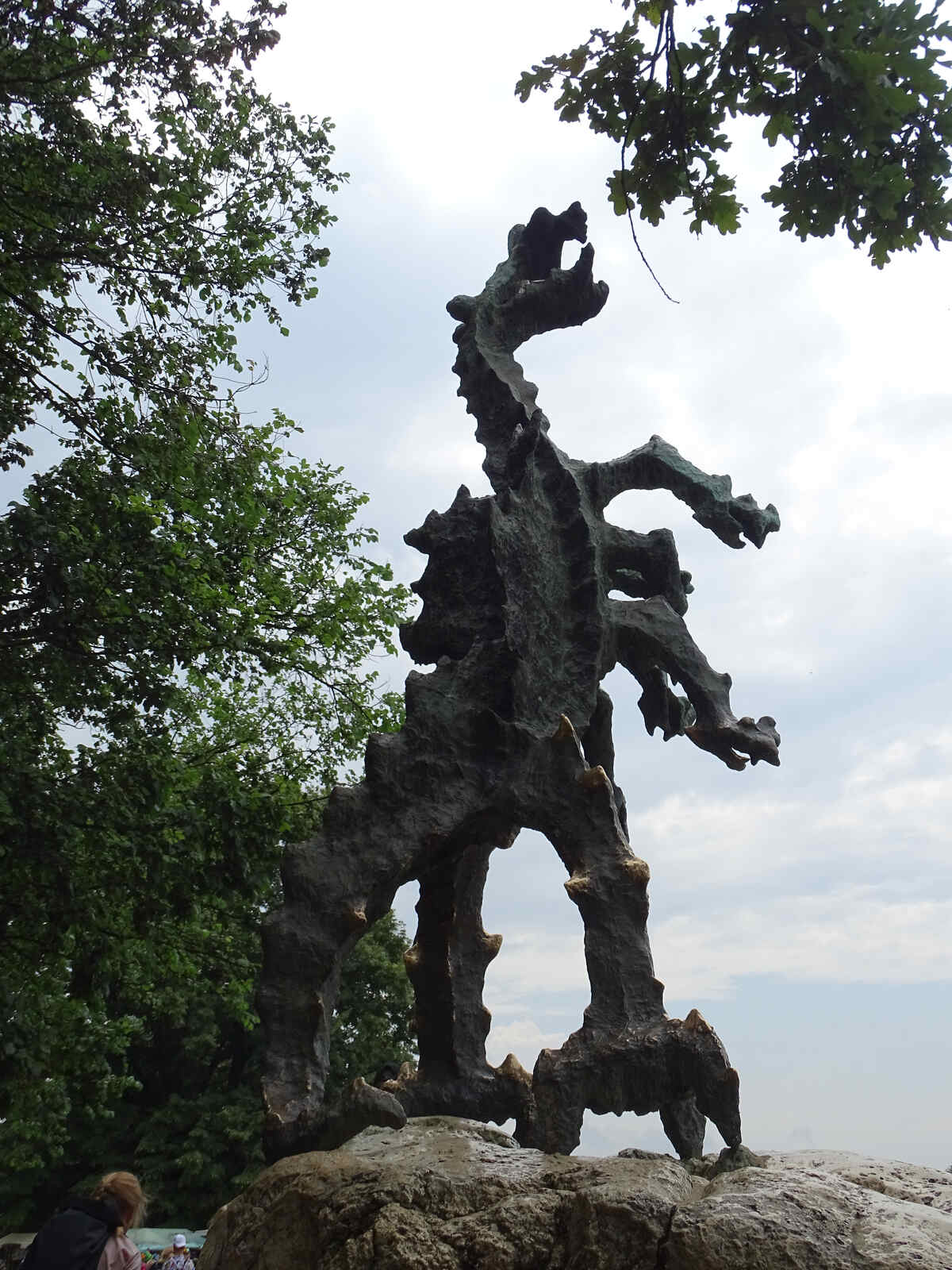
To quench his thirst, the dragon started to drink from the nearby Vistula River. However, water couldn’t stop the burning within his stomach, so the dragon kept drinking until his belly was so full of water that it exploded.
All the townsfolk celebrated at the news of the dragon’s defeat and the heroic shoemaker got to marry the princess.
This is just one of many variants of the same story with all major elements being there, but some details changing from one version to the other.
For example, in most versions the King of Krakow’s name is “Krak” and the shoemaker’s apprentice Skuba slays the dragon. But in some versions, there is another King and the shoemaker’s name is “Krak,” and he becomes the new king with the settlement being named after the dragon slayer.
While there aren’t too many dragons in Krakow nowadays, there is a large fire breathing statue of Smok Wawelski at the foot of Wawel Hill, placed there in 1972 to commemorate the legend.
(From the book “Legend of Krakow”)
References:
The Dragon Prince at Eleanor d’Aquitaine’s Court (France)
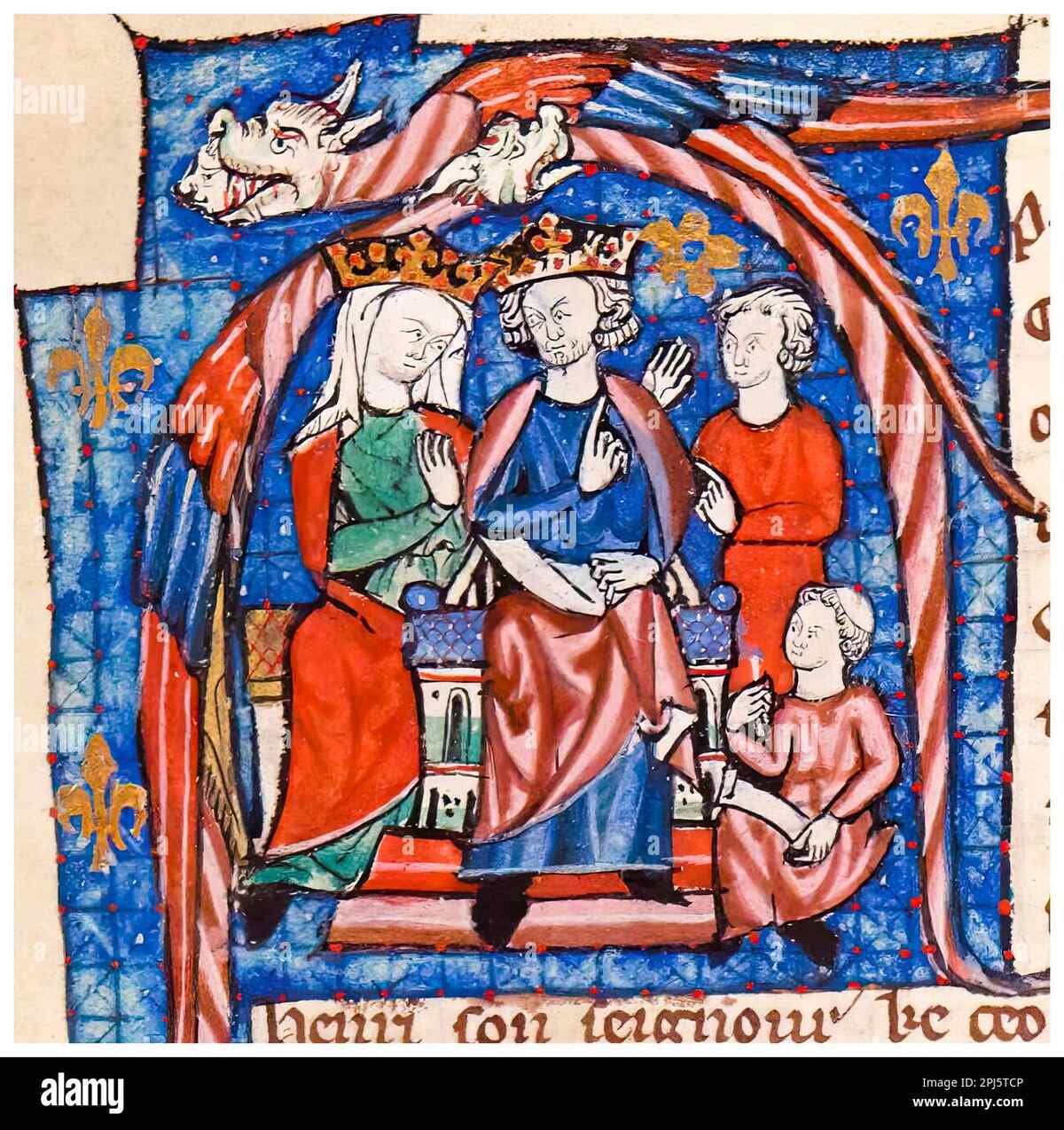
Eleanor of Aquitaine was a pivotal figure in popularizing and shaping courtly love, a medieval ideal of chivalrous romance elevating women through devotion and service, bringing these themes from her native Aquitaine to the courts of France and England.
Her upbringing in Aquitaine, a region known for its troubadour tradition and culture of fin’amor (refined love), gave her firsthand exposure to these concepts, which she then spread across Europe.
At her court, an anonymous and strikingly handsome troubadour wins an annual tournament, captivating the hearts of many: especially Griselda, the youngest daughter of the lord of Foix.
She falls deeply in love and agrees to marry him under one condition: that she must never seek his true identity or enter his private chamber.
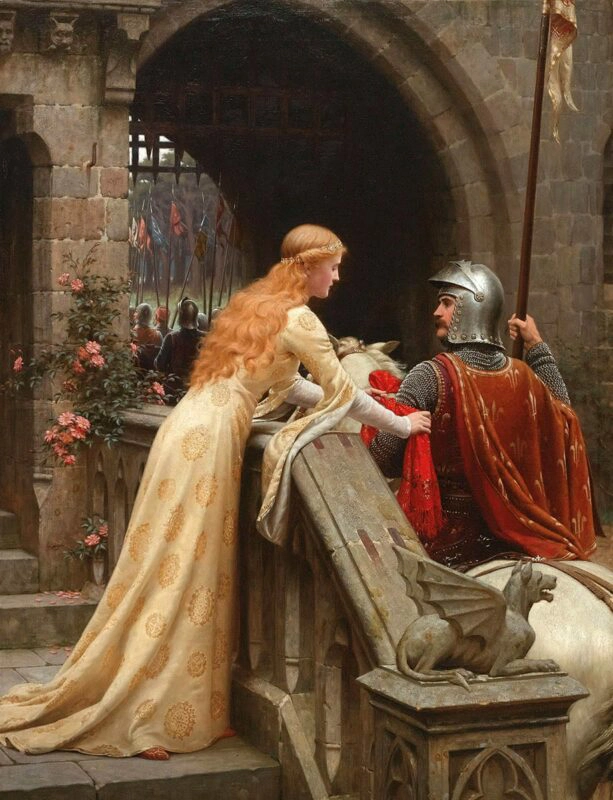
via The Collector and Sotheby’s
For a time, their life is blissful. The troubadour offers her a lavish home, endless comforts, and his devoted affection. But curiosity overtakes Griselda.
One day, she peeks into the forbidden room and witnesses her husband transform into a massive green-scaled dragon. Her gasp of horror breaks the spell of trust. Heartbroken, the dragon prince sends her back to Eleanor’s court, never to see her again.
Filled with sorrow and longing, Griselda records her tale, ensuring that the legend of the Dragon Prince lives on.
References:
📝 GUEST BLOGGER BIO:
These research notes and most of the photos were contributed by Zar Antonov, President of the Obscurium Micronation and Head of the Society of Dracology.
Further Reading:
- German Dragons
- European Dragons: Part 2 (currently editing)