

“Eternal Horned Serpent” | header image art by KewiiArt/Etsy
While the word ‘dragon’ doesn’t appear in many Native American traditions, many cultures across Turtle Island* carry stories of serpents, water spirits, and powerful nature beings that resonate with dragon archetypes.
* ‘Turtle Island’ is the name for the lands now known as North and Central America. It is a name used by some Indigenous peoples who believe their land was formed on the back of a turtle.
– DeadlyStory.com
For example, in Wabanaki* lore, horned serpents and underwater creatures appear in tales of creation, transformation, and the environment.
* The five tribes of the Wabanaki Confederacy are the Abenaki Tribe, Penobscot Tribe, Micmac Tribe, Maliseet Tribe, and Passamaquoddy Tribe. These five related tribes of northeast New England and the Canadian Maritimes speak similar languages and share many cultural similarities, including much of their folklore.
– Native-Languages.org
This post explores Native American dragon‑adjacent motifs through a lens exploring serpent stories, nature art, and mythic echoes.
Terminology varies as “Native American” is commonly used in the U.S., while “First Nations” or “Indigenous” are preferred terms in Canada.
The most respectful approach is to use the specific name of the individual’s or community’s tribe or nation whenever possible.
READ MORE: Passamaquoddy (Pete’s Dragon, 1977)
Water Monsters
Kitchí-at’Husis and Weewilmekq are water monsters from Passamaquoddy mythology.
- Kitchí-at’Husis: Forty foot long water serpent with antlers and venomous fangs that once lived in the waters of Boyden Lake in Maine, North America, but was beaten and eaten by a Weewilmekq; it was possibly a protean shaman.
- Weewilmekq: Giant leech with deadly suckers, in fact the shaman Medskelemet in disguise, that defeated the Kitchi-at’husis in Lake Boyden in North America.
- Amhuluk: Paiute serpent of Oregon, dwelling in lakes.
- Maine’s Pocomoonshine Lake Monster: According to Algonquin lore, a shaman disagreed with another tribe’s chief. They transformed into a giant snail and 40-foot-long serpent for a fight. The snail won and hung the Chief Serpent on a tree beside the lake. Since then, there have been reports of a 30-foot-long snake monster at the lake and snake tracks in the mud.
- Avanyu: Water serpent deity of the Pueblo Native American tribes in Arizona and New Mexico, symbolizing the importance of water to the people of the arid Southwest. The symbol is frequently depicted in Pueblo pottery and art, representing clouds, rain, lightning, and water.

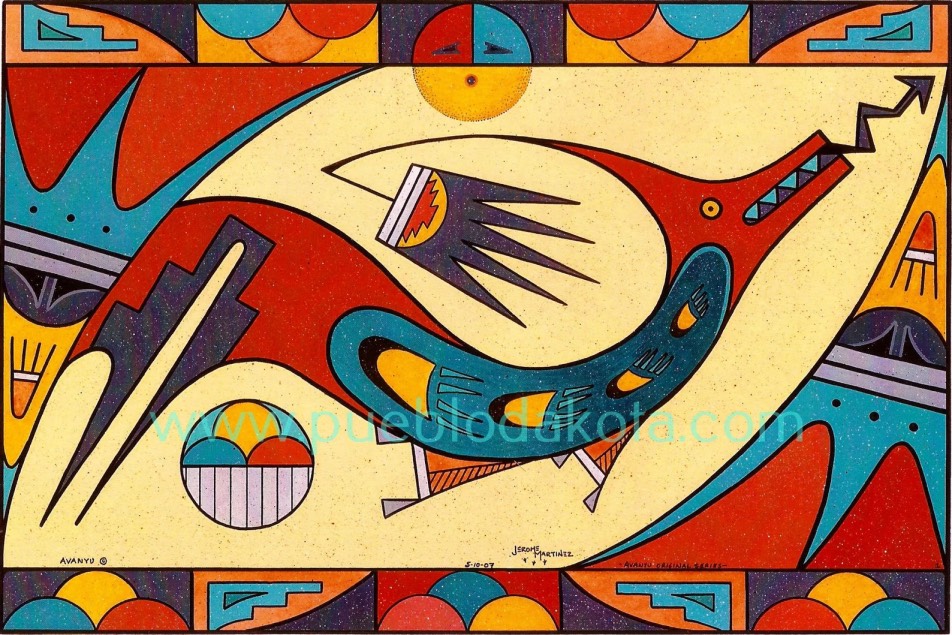
References: Native-Languages.org, Dragon Wiki, The Circle of the Dragon, Fangoria
Cherokee Uktena (Horned Serpent / Dragon Protector)
Uktena is a horned serpent or giant snake with horns, blazing crest, and sometimes wings; feared yet powerful.
In Cherokee culture, Uktena is associated with danger, jealousy, and also linked to healing and protection.
In modern art, Azurae Windwalker’s Cherokee Dragon Land Protector Uktena (Etsy) frames Uktena as an Earthkeeper and healer.
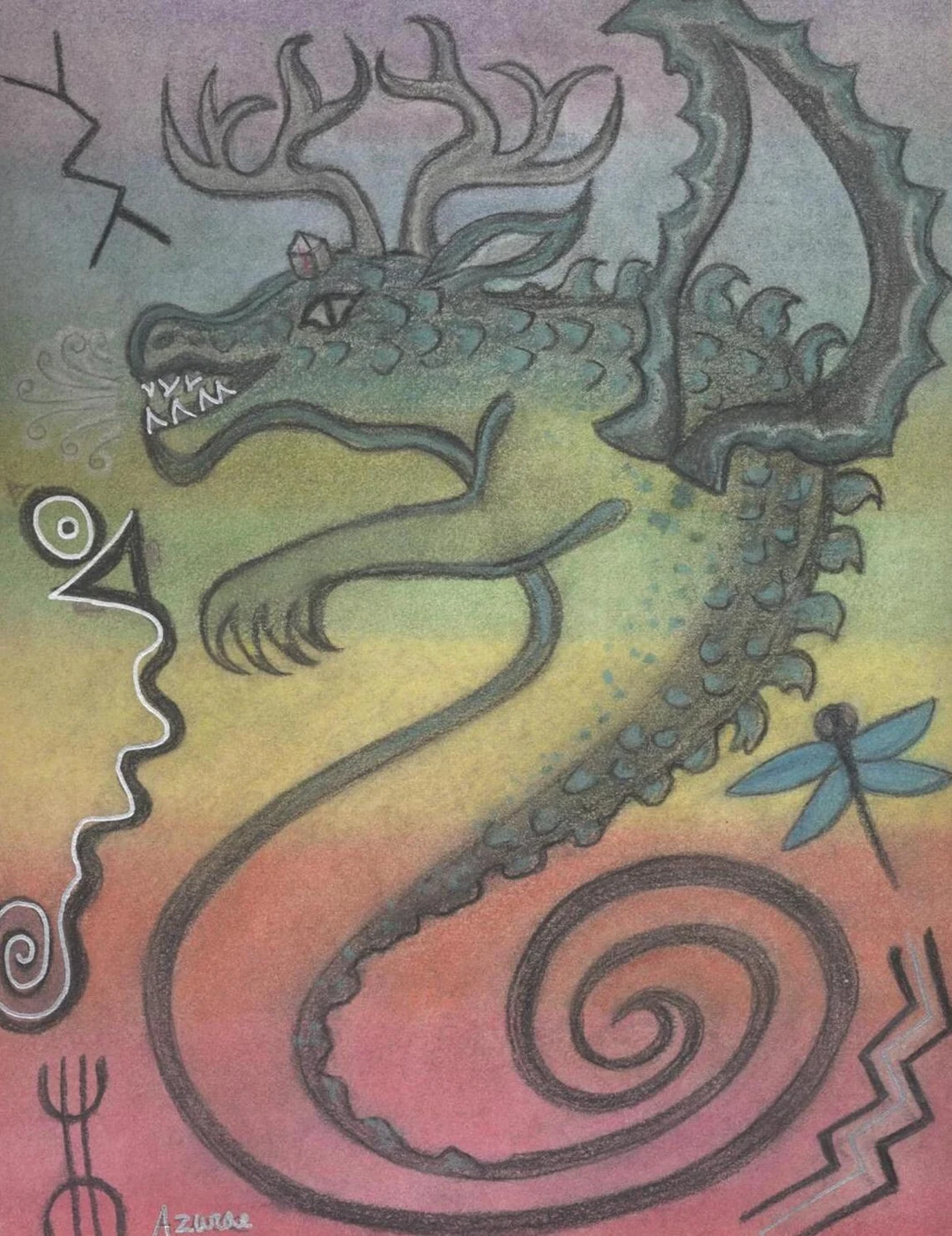
In this rendition by Azurae, Uktena is described as the “over‑soul of all the Nature Beings,” guarding and protecting territory.
A Few Other Native Dragon/Serpent Figures
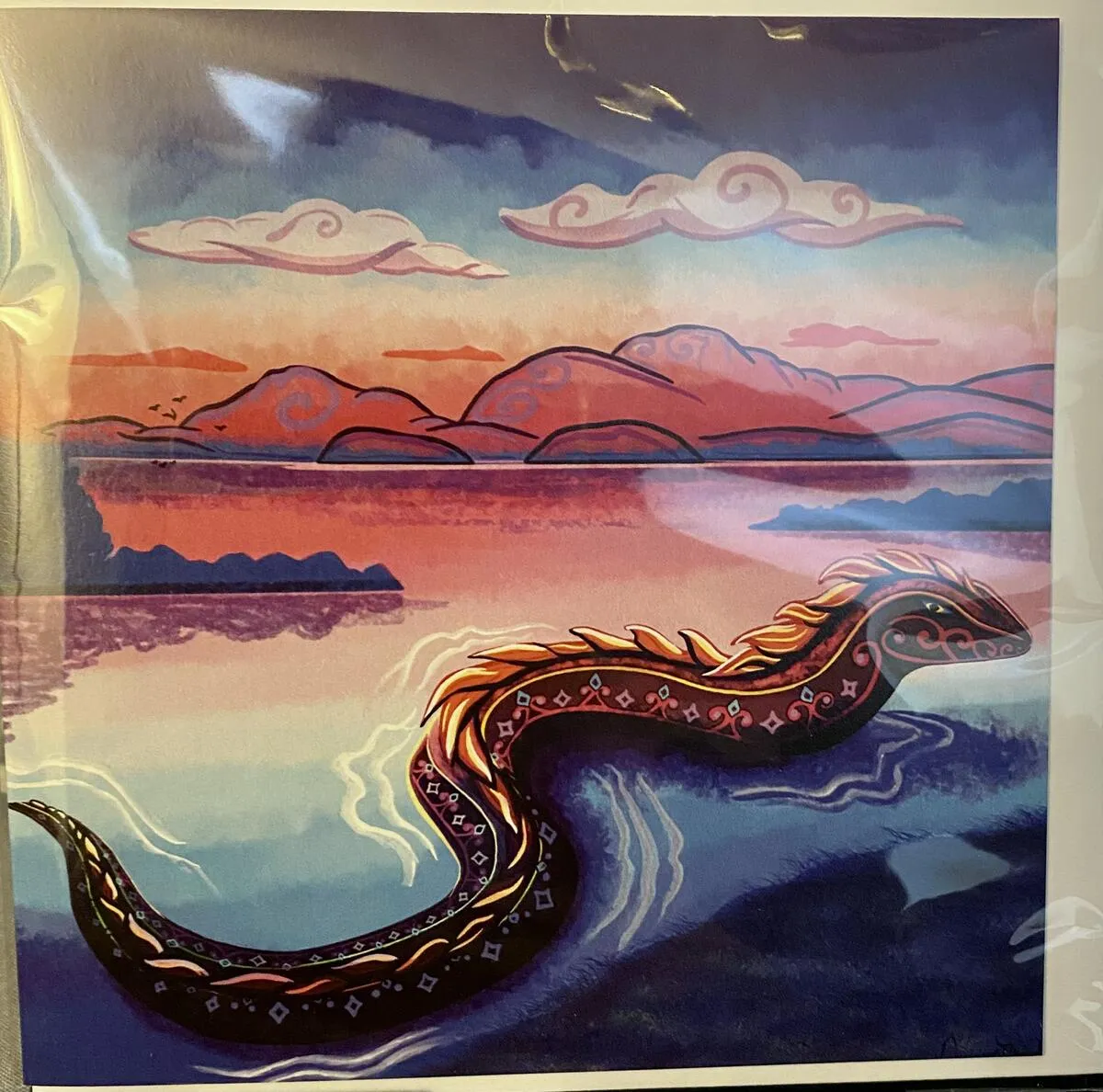
- Gaasyendietha: A Seneca “fire serpent” said to fly across lakes.
- Glooscap: Central to Wabanaki mythology, Glooscap is a creator figure who battles giant beings, including a frog monster whose body created the Penobscot River. These battles echo dragon‑slaying motifs.
- Apodumken: The Passamaquoddy have legends of the apodumken in Passamaquoddy and Machias Bays. It is a large fanged sea serpent.
- BONUS – Dragon pole at Potlatch Totem Park (Ketchikan, Alaska): Potlatch Totem Park is one of two side-by-side totem pole parks dedicated to educating visitors on Tlingit history and culture.
References
- Mythical Encyclopedia on Native dragons
- Circle of the Dragon: North American legends
- World History Encyclopedia
- Appalachian History on Uktena
- Native History Association on Uktena
- Wikipedia on Horned Serpent
- World History Encyclopedia
- The University of Maine
- Emergence Magazine: Water Serpents
- Atlas Obscura: Potlatch Totem Park
- Alaska Trippers (dragon totem pole)
- Mythical Creatures of Maine: Fantastic Beasts from Legend and Folklore (by Christopher Packard)